


Looking for the best system design books? This blog is for you.
2026 is the year of AI. There is so much advancements happening in software engineering, cloud and DevOps world. Generating code, configs and template are much easier than ever.
However, system design is the key area that most organizations focus on. If you can design systems better, you will have an edge in interviews. It applies to SWE's, DevOps engineers, SREs and Platform Engineers.
In this blog, I have listed the System Design books for practical learning for both beginners and professionals, and these books will help to clear the interview.
While learning portal like ByteByteGo, educative.io, exponent are great at system design, some of you may prefer reading a full book. If you are someone like that, this list if for you.
Lets get started with the list.
1. System Design on AWS
(Written by Jayanth Kumar and Mandeep Singh)
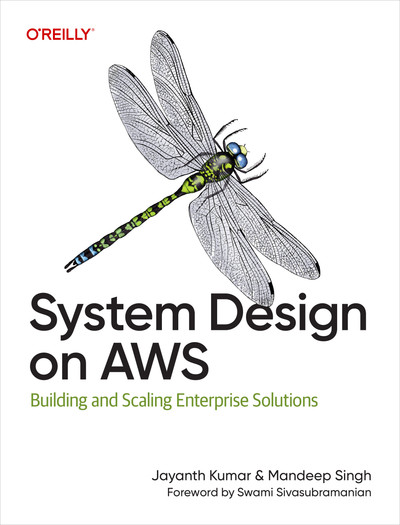
System Design on AWS is an intermediate to advanced-level learning guide.
You know that enterprises are building complex applications in the cloud face multiple challenges. So, figuring out the right tool for provisioning can be difficult.
So, this practical book helps you decide which tool to use and how to fit them together effectively.
In this book, you will learn the following:
- You will learn the basics and best practices of system design
- Learn about key AWS services and their strengths and limitations for building large-scale systems.
- You will examine engineering patterns and principles, which will support large-scale systems, and you will learn how to design architecture with scalability, operations, and resilience.
- Learn about performant and cost-optimized architectures on AWS and the tools and frameworks that are best for specific use cases.
2. Acing the System Design Interview
(Written by Zhiyong Tan)
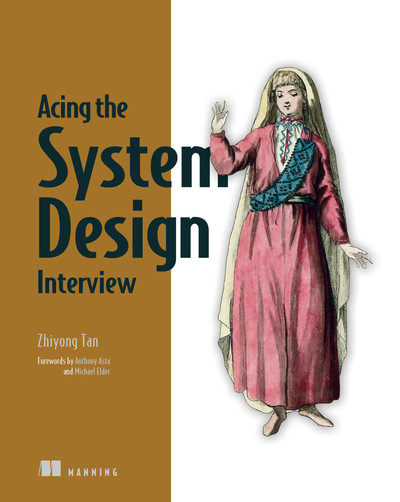
Acing the System Design Interview is an intermediate to advanced-level guide and it is mainly for who want to crack the system design interview.
While I was talking to System Design professionals, I got to know that clearing the interview is one of the hardest and challenging tasks.
So, to ace the interview with practical knowledge, this book will definitely be helpful for you.
In this book, you will learn:
- How to scale applications to support heavy traffic.
- Learn distributed transactions techniques to ensure data consistency.
- Learn about services for functional partitioning, such as API gateway and service mesh.
- Learn common API paradigms, including REST, RPC, and GraphQL,
- You will learn caching strategies, including their tradeoffs.
- Logging, monitoring, and alerting concepts are critical in any system design.
- Communication skills that demonstrate your engineering maturity.
If you are now a reading person, it also has a video edition in a beginner-friendly manner.
3. System Design Guide for Software Professionals
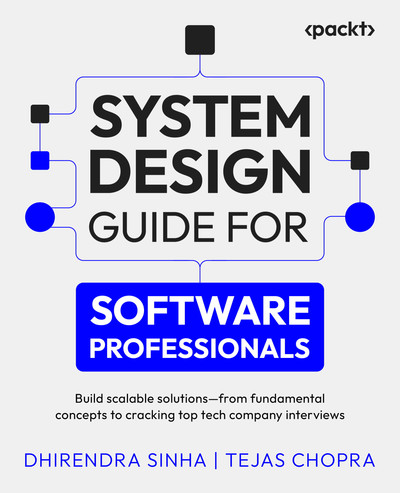
The book System Design Guide for Software Professionals is authored by Dhirendra Sinha, an Engineering leader at Google, and Tejas Chopra, a senior Software Engineer at Netflix and an educator.
This book is best suited for software engineers, backend developers, and system architects who want to gain in-depth knowledge about scalable systems.
This book will help you to gain the following:
- Learn an in-depth understanding of distributed system principles and techniques.
- Learn about design strategies for scalable, efficient, and real-world software systems.
- You will master the architecture behind popular applications like Uber and Google Docs.
- You will definitely develop confidence in answering system design questions during tech interviews.
- Get to know yourself with practical tools and frameworks for modern cloud systems.
4. Machine Learning System Design
(Written by Arseny Kravchenko, Valerii Babushkin)
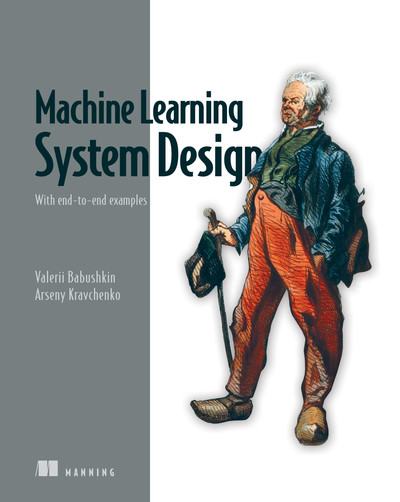
The Machine Learning System Design book will help you learn how to deploy and design a machine learning end-to-end.
At the end of this practical guide, you will get a good practical knowledge about a reliable framework for building, maintaining, and improving machine learning systems at any scale or complexity.
In this book, you learn:
- Learn about machine learning system design
- Learn to analyze a problem space to identify the optimal ML solution
- You will ace ML system design interviews
- Learn to select appropriate metrics and evaluation criteria
- You will learn how to prioritize tasks at different stages of ML system design
- Learn to solve dataset-related problems with data gathering, error analysis, and feature engineering
- Learn about recognizing common pitfalls in ML system development
- Learn to design ML systems to be lean, maintainable, and extensible over time
5. Building Microservices: Designing Fine-Grained Systems
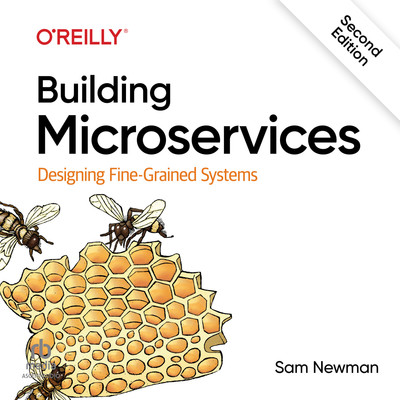
This book is for architects, developers, testers, and IT operators by author Sam Newman, with practical advice.
You learn how the latest solutions for modeling, integrating, testing, deploying, and monitoring your own autonomous services work with real-world use cases.
In this book, you will learn the following:
- Stay up-to-date with the latest information on user interfaces, container orchestration, and serverless computing.
- Learn to align system design with your organization's goals.
- You will explore options for integrating a service with your system.
- You will learn how to independently deploy microservices.
- Examine the complexities of testing and monitoring distributed services.
- Learn about how to manage security with expanded content around user-to-service and service-to-service models.
6. Designing Distributed Systems
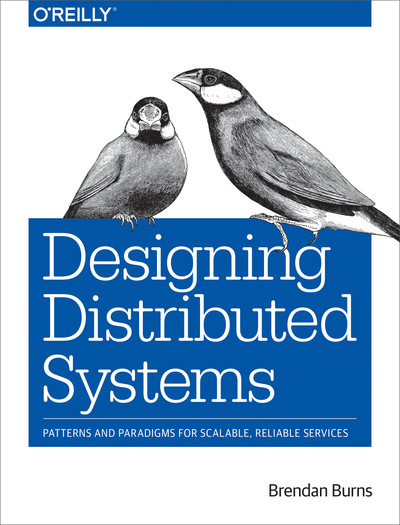
The Designing Distributed Systems book's author, Brendan Burns, is director of engineering at Microsoft Azure.
He explains how you can adapt existing software design patterns for designing and building reliable distributed applications.
In this practical book, you will learn the following:
- Learn about how patterns and reusable components enable the rapid development of reliable distributed systems
- Learn to use the sidecar, adapter, and ambassador patterns to split your application into a group of containers on a single machine.
- Learn loosely coupled multi-node distributed patterns for replication, scaling, and communication between the components.
- Learn about distributed system patterns for large-scale batch data processing, covering work-queues, event-based processing, and coordinated workflows.
7. Frontend Architecture for Design Systems
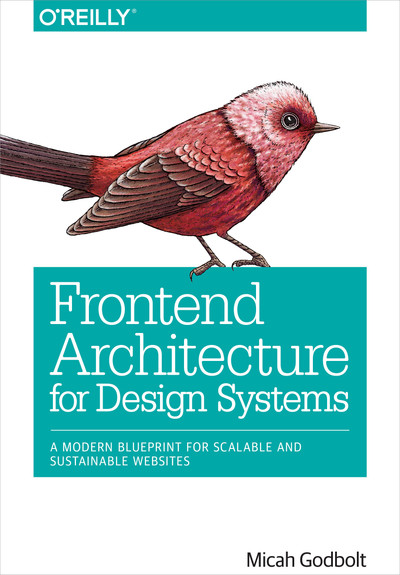
The book Frontend Architecture for Design Systems includes real-world examples, case studies, and practical tips drawn from the real experiences of its author, Micah Godbolt.
This is an intermediate to advanced-level book, and the skill you will learn is Software architecture.
Also, he mentioned four pillars, which are code, process, testing, and documentation.
- Code: Learn how to approach the HTML, CSS, and JavaScript of a design system.
- Process: Learn about tools and processes for creating an efficient and error-proof workflow.
- Testing: Learn to create a stable foundation on which to build your site.
- Documentation: Explore tools for writing documentation while the work is in progress.
8. Spring System Design in Practice
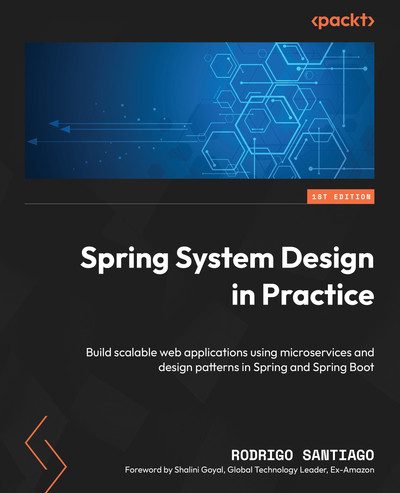
The author of this book, Spring System Design in Practice, is a seasoned Software architect and educator with a huge experience in designing enterprise-grade applications using Java and Spring technologies.
This book is best for software developers, and it will help to master modern web application development using Spring Framework and Spring Boot.
So, you will learn clear explanations and real-world examples to design and implement scalable, resilient microservice architectures while writing clean and efficient code.
In this book, you will learn,
- How to implement robust microservices for building scalable and maintainable applications.
- Learn how to decompose business requirements into actionable technical deliverables.
- Learn the techniques for improving software performance and reliability through effective design.
- You will gain expertise in utilizing Spring components for achieving system architecture goals.
- You can explore methods of achieving secure and asynchronous communication in distributed systems.
Conclusion
I have listed the top System Design Books to improve your skills and crack the interview.
If you are looking for any specific book on System Design, please drop it in the comments, and I will list it out here.
Happy Learning!